Back to blog
Blog
👁️ 26 views
📅 09 Dec 2025
5 Essential Tips for Beginner Cooks: Start Your Culinary Journey with Confidence
Learn the fundamental cooking skills every beginner needs to master. From knife techniques to flavor balancing, these simple tips will transform your time in the kitchen and help you create delicious meals with ease.
Cooking can feel overwhelming when you're just starting out, but mastering a few basic techniques will set you up for success in the kitchen. Whether you're preparing your first meal or looking to improve your skills, these essential tips will help you cook with confidence.
1. Master Your Knife Skills
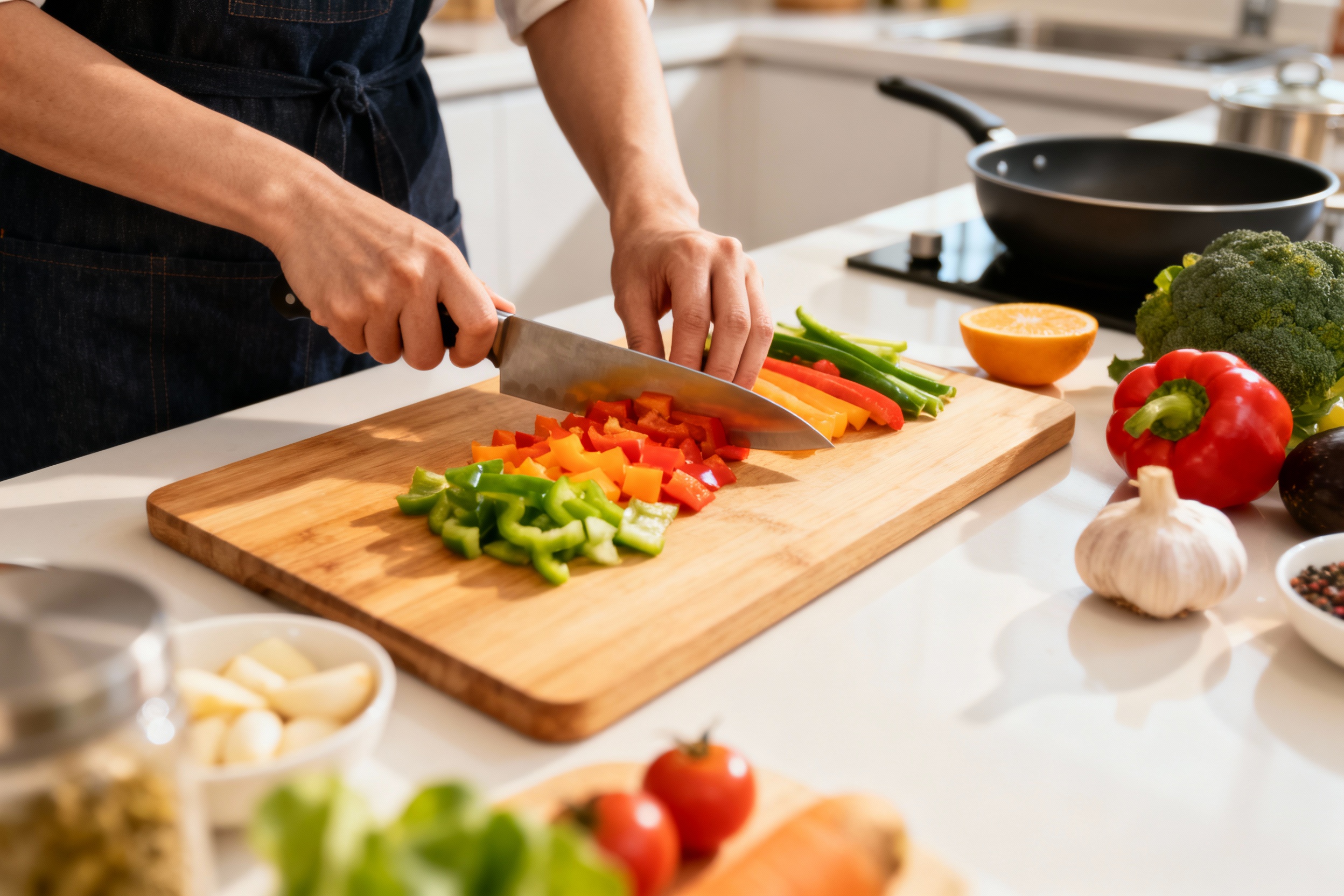
Good knife skills are the foundation of efficient cooking. Start by learning how to properly hold a chef's knife and practice basic cuts like dicing, mincing, and slicing. A sharp knife is safer than a dull one, so invest in a quality knife and learn to maintain it. Take your time at first—speed will come naturally with practice.
2. Read the Recipe Completely Before Starting
One of the biggest mistakes beginners make is starting to cook without reading the entire recipe first. Take a few minutes to read through all the steps, understand the timing, and prepare your ingredients (a technique called "mise en place"). This prevents surprises and ensures you have everything ready when you need it.
3. Learn to Season Properly
Salt and pepper are your best friends in the kitchen. Season your food in layers as you cook, not just at the end. Taste as you go and adjust seasonings gradually. Remember, you can always add more, but you can't take it away. Understanding how to balance flavors will elevate even the simplest dishes.
4. Control Your Heat
Temperature control is crucial for good cooking. High heat isn't always better—different techniques require different temperatures. Learn when to sear over high heat, when to simmer gently, and when to use medium heat for even cooking. Pay attention to visual cues like bubbling, browning, and steam to gauge if your heat level is correct.
5. Don't Fear Mistakes
Every experienced cook has burned something or oversalted a dish. Mistakes are part of the learning process. Instead of getting discouraged, figure out what went wrong and try again. Keep a cooking journal to note what worked and what didn't. With each attempt, you'll gain more understanding and confidence.
Start Simple and Build Your Skills
Begin with beginner-friendly recipes that have short ingredient lists and clear instructions. As you master basic techniques, gradually challenge yourself with more complex dishes. Focus on learning one new skill at a time rather than trying to perfect everything at once.
Stock Your Kitchen with Essentials
You don't need expensive equipment to cook well. Start with basics: a good chef's knife, cutting board, a few quality pots and pans, measuring cups and spoons, and basic utensils. As you cook more, you'll discover what additional tools will be most useful for the types of dishes you enjoy making.
1. Master Your Knife Skills
Good knife skills are the foundation of efficient cooking. Start by learning how to properly hold a chef's knife and practice basic cuts like dicing, mincing, and slicing. A sharp knife is safer than a dull one, so invest in a quality knife and learn to maintain it. Take your time at first—speed will come naturally with practice.
2. Read the Recipe Completely Before Starting
One of the biggest mistakes beginners make is starting to cook without reading the entire recipe first. Take a few minutes to read through all the steps, understand the timing, and prepare your ingredients (a technique called "mise en place"). This prevents surprises and ensures you have everything ready when you need it.
3. Learn to Season Properly
Salt and pepper are your best friends in the kitchen. Season your food in layers as you cook, not just at the end. Taste as you go and adjust seasonings gradually. Remember, you can always add more, but you can't take it away. Understanding how to balance flavors will elevate even the simplest dishes.
4. Control Your Heat
Temperature control is crucial for good cooking. High heat isn't always better—different techniques require different temperatures. Learn when to sear over high heat, when to simmer gently, and when to use medium heat for even cooking. Pay attention to visual cues like bubbling, browning, and steam to gauge if your heat level is correct.
5. Don't Fear Mistakes
Every experienced cook has burned something or oversalted a dish. Mistakes are part of the learning process. Instead of getting discouraged, figure out what went wrong and try again. Keep a cooking journal to note what worked and what didn't. With each attempt, you'll gain more understanding and confidence.
Start Simple and Build Your Skills
Begin with beginner-friendly recipes that have short ingredient lists and clear instructions. As you master basic techniques, gradually challenge yourself with more complex dishes. Focus on learning one new skill at a time rather than trying to perfect everything at once.
Stock Your Kitchen with Essentials
You don't need expensive equipment to cook well. Start with basics: a good chef's knife, cutting board, a few quality pots and pans, measuring cups and spoons, and basic utensils. As you cook more, you'll discover what additional tools will be most useful for the types of dishes you enjoy making.
📅 Published: 09 Dec 2025
•
👁️ 26 reads